

Power Measurement System: Clamp-Type AC Current Sensor (Basic Edition)
AC current sensor, split-type clamp sensor
This is a lineup of medium to large-sized high current models for electrical equipment.
- Company:U.R.D.CO.,LTD.
- Price:Other
1~20 item / All 20 items
AC current sensor, split-type clamp sensor
This is a lineup of medium to large-sized high current models for electrical equipment.

Performance of current sensors for accident detection! Sensors compatible with the shield grounding wire of power cables.
The "AC Current Sensor" from Miwa Electric is a current sensor designed for the shield grounding wire of power cables. It has over 20 years of proven performance as a current sensor for accident detection. It is suitable for detecting abnormal signs and partial discharges in power cables. It has excellent environmental resistance and can withstand long-term use with 3G-level accuracy. 【Features】 ■ Current sensor compatible with the shield grounding wire of power cables ■ Proven performance as a current sensor for accident detection ■ Well-suited for detecting abnormal signs and partial discharges in power cables ■ Excellent environmental resistance ■ Can withstand long-term use with 3G-level accuracy *For more details, please refer to the PDF document or feel free to contact us.

AC current sensor General measurement CTL general-purpose series
This is a medium-sized series of output lead wire types.

AC Current Sensor General Measurement CTL General Series
This is a medium-sized series of output lead wire types.

AC current sensor General Measurement CTL Universal Series
This is an expanded version of the medium-sized series for both PC board and panel mounting.

Compact IoT Sensor with Built-in Modbus RTU Communication for Circuit-Level AC Current Measurement (125–630A)
PAL-Plus High-Capacity Model: IoT Sensor with Built-in Communication for AC Current Measurement We offer four sensor models supporting rated currents of 125A, 250A, 400A, and 630A. Key Features: Modbus RTU Communication Highly versatile and easily integrated into existing systems. Split-Type Clamp Sensor Enables safe and easy installation without stopping equipment operation. Ultra-Compact Design with Built-in Communication Ideal for installations with multiple measurement points, saving space and simplifying setup. Combine with the PAL-Plus Gateway, which converts sensor signals to Modbus TCP and supplies power to sensors, for a more space-efficient and cost-effective system configuration. For more details, please download the brochure or contact us. Demo units are available upon request. For small and medium-capacity sensors (up to 60A), please refer to the PAL-Plus product page.

You can safely and easily install sensors using the "retrofit clamp-type sensor" without stopping the equipment currently in operation.
We will introduce the installation method for the IoT sensors "PAL-Plus" and "PAL-Plus Large Capacity Version," which are easy to use, space-saving, and capable of measuring alternating current with built-in communication functions using Modbus RTU communication! 【Installation Method】 1. Clamp the sensor onto the wire where you want to measure the alternating current. 2. Securely fasten the wire and sensor together with a cable tie. 3. Completed. *Please be careful when working with live electricity, as there is a risk of electric shock.

AC current sensor, split-type clamp sensor
It is a large model for electrical equipment.

AC current sensor, split-type clamp sensor
This is a lineup of medium to large-sized high current models for electrical equipment.

Add measurement points to large equipment circuits ranging from 125A to 630A. Record alternating current by operating days, time periods, and durations, which can be used to verify equipment operation.
Would you like to continuously record the current flowing through large molding equipment? The "PAL-Plus Large Capacity Version" is a sensor that measures AC currents of 125A, 250A, 400A, and 630A, and can output to higher-level devices via Modbus RTU communication. It can continuously measure currents outside of patrol times, allowing for remote monitoring. This reduces the burden of manual measurements and helps in understanding the operational status of the equipment, energy conservation, and efficient power usage. 【Challenges】 - I want to continuously record the circuit current of large equipment. - I want to check current changes outside of patrol times. - I want to reduce the burden of manual measurements. 【Benefits of Implementation】 - Obtain measurement values of AC current via communication. - Labor-saving for manual measurements. - Narrowing down the periods or circuits that need to be checked. You can check the detailed specifications and installation conditions in the downloadable materials. For more details, please download the materials or feel free to contact us.

A lineup of 60A, 125A, 250A, 400A, and 630A is available. You can select models based on the actual current of the target circuit, cable diameter, and conditions inside the panel.
When adding AC current sensors to existing equipment circuits or branch circuits, it is important to check not only the equipment name but also the actual current, cable diameter, panel space, power supply, and communication wiring. The PAL-Plus 60A measures AC currents up to 60A, while the high-capacity versions measure 125A, 250A, 400A, and 630A. The PAL series allows you to choose between simple power sensors or AC current sensors based on the data you want to verify, circuit configuration, and current capacity. 【Challenges】 - I want to select an AC current sensor that matches the circuit capacity. - I want to manage from small capacity to main circuits using the same method. - I want to determine the rating based on actual current and cable diameter. 【Benefits of Implementation】 - Selection by rating from 60A to 630A. - Compatibility from small capacity equipment to main circuits. - Consideration of configurations that match actual current and cable diameter. You can check detailed specifications and connection configurations in the downloadable materials. For more details, please download the materials or feel free to contact us.

First, we will confirm compatibility and communication from one circuit. We will start small and support the gradual expansion of power monitoring to match operational needs.
When starting to monitor large-capacity circuits, many people think, "I want to confirm if the sensors are compatible with the target equipment" or "I want to test if the communication can be stable." With the PAL-Plus large-capacity version, you can conduct evaluation from a single circuit or a small number of circuits before full-scale implementation, gradually expanding the monitoring range while confirming operational results. The PAL-Plus large-capacity version offers four types: 125A, 250A, 400A, and 630A. You can select the optimal sensor according to the target current and cable diameter. Additionally, it adopts a split clamp type that is easy to install on existing equipment and supports data collection via Modbus RTU (RS-485) communication. This allows for future expansion into remote monitoring systems. 【Challenges】 - Want to confirm compatibility/communication before full-scale implementation - Want to reduce initial costs - Want to prepare for future expansion 【Expected Benefits】 - Optimal selection from four types - Easy to retrofit with a split type - Potential for future remote monitoring expansion For more details, please check the materials or feel free to contact us.

Record the alternating current of the factory master and line branches over time. Confirm trends at the factory and line level, and then organize the lower circuits to examine in detail.
By continuously recording the alternating current of the main circuit and line branches, you can confirm usage trends for the entire factory or by line unit over time. Relying only on monthly power consumption or values during patrols may make it difficult to grasp changes over the period. The alternating current sensor "PAL-Plus Large Capacity Version" continuously measures target circuits from 125A to 630A and outputs data to higher-level devices via Modbus RTU. 【Challenges】 - I want to keep a record of the current trends in the main circuit and line branches. - I want to confirm trends at the factory and line unit level. - I want to select the lower circuits to examine in detail next. 【Benefits of Implementation】 - Time-series recording of the main circuit and line branches. - Confirmation of trends at the factory and line unit level. - Selection of additional measurement ranges for lower circuits. You can check detailed specifications and installation conditions in the downloadable materials. For more information, please download the materials or feel free to contact us.
Supports processes with a mix of large-capacity and small-capacity circuits. Select sensors according to the actual current and cable diameter, allowing for centralized management of multiple circuits.
In die casting and pressing processes, there may be a mix of high-capacity main circuits and low-capacity peripheral circuits. Instead of using the same rated sensors for all circuits, it is necessary to select them according to the actual current and cable diameter. The PAL series, Gateway BOX, and CEW-M4 can be combined according to their purpose, allowing for a phased configuration from circuit-specific measurements to cloud verification and centralized management. 【Challenges】 - There is a mix of high-capacity and low-capacity circuits. - I want to view multiple circuits on the same screen. - I want to compare with production schedules and inspection records. 【Benefits of Implementation】 - Use different sensors according to circuit capacity. - Consolidate multiple circuits onto a common screen. - Understand usage trends across the entire process. You can check detailed specifications and connection configurations in the downloadable materials. For more information, please feel free to download the materials or contact us.

Visualize the load status of high-capacity circuits with a Modbus-compatible current sensor. It supports a range from 125A to 630A, making it compatible with a wide variety of equipment.
To ensure stable operation of the main circuit, UPS, and PDU in a data center, it is important to continuously monitor power usage. The PAL-Plus large-capacity version is a split-core AC current sensor that supports four ratings: 125A, 250A, 400A, and 630A. It integrates measurement functions and Modbus RTU (RS-485) communication within the unit, contributing to the simplification of equipment configuration and space-saving within the panel, while assisting in monitoring power usage through the current sensor. 【Usage Scenarios】 - Current monitoring of the main circuit, UPS, and PDU - Adding remote monitoring capabilities to existing equipment - Integration with BMS, SCADA, and PLC systems 【Benefits of Implementation】 - Supports large-capacity circuits from 125A to 630A - Simplifies configuration with integrated measurement and communication - Effectively utilizes limited panel space - Compatible with Modbus-enabled higher-level devices *For more details, please refer to the PDF document or feel free to contact us.

Continuing measurement of extrusion processes for circuits ranging from 125A to 630A. You can compare the variety, production lot, operating time, setting change records, and current history.
Continuous measurement of circuit currents from 125A to 630A in the extrusion process. The measured values can be output to higher-level devices and used for verifying production records and current history. The circuit current in the extrusion process varies depending on the product type, operating time, and startup conditions. The "PAL-Plus Large Capacity Version" continuously measures target circuits from 125A to 630A and outputs data to higher-level devices via Modbus RTU communication. This helps in understanding current changes based on operating conditions, which may not be easily visible with monthly power consumption alone. 【Challenges】 - Want to retain the current history of large-capacity circuits in the extrusion process. - Want to confirm differences based on product type and operating duration. - Want to compare production records with current history. 【Benefits of Implementation】 - Continuous measurement of large-capacity circuits in the extrusion process. - Comparison of current history by product type, lot, and operating duration. - Narrowing down specific periods or circuits that require detailed examination. You can check the detailed specifications and installation conditions in the downloadable materials. For more information, please download the materials or feel free to contact us.

AC current sensor "PAL-Plus Large Capacity Version" compatible with 125A to 630A.
The centralized power system of the factory supplies electricity to multiple facilities and areas, making it difficult to grasp changes in the entire circuit. The "PAL-Plus Large Capacity Version" continuously measures the alternating current of large capacity circuits. The acquired data is output to higher-level devices via Modbus RTU, enabling the recording and verification of current history. By comparing this with operational schedules, equipment operating hours, and maintenance records, it is possible to understand trends by day and time, as well as differences before and after operational changes. [Challenges] - I want to continuously record the current trends of the centralized power system. - I want to check trends by operational days and time periods. - I want to compare operational records of common equipment with current data. [Effects of Implementation] - Continuous storage of current history for centralized power circuits. - Comparison with operational schedules, operating hours, and maintenance records is possible. - Organizing operational trends of the entire circuit and utilizing them for situation understanding. You can check detailed product specifications and installation conditions in the downloadable materials.

Measured using large-capacity circuits that supply power to equipment groups and auxiliary systems. You can compare records of production schedules, operating days, maintenance work, and current fluctuations.
In the molding line, in addition to the main equipment, high-capacity circuits that support the operation of the entire line are used. However, if only the main equipment is monitored, it is difficult to grasp the operational status and usage trends of the entire equipment, including the related circuits. The PAL-Plus High-Capacity version continuously measures the current of high-capacity circuits that supply power to equipment groups and auxiliary systems. By comparing records of production plans, operating days, and maintenance work with current data, it can be utilized to confirm the operational status of the entire line. Additionally, it supports high-capacity circuits ranging from 125A to 630A and can output measurement data to higher-level systems via Modbus RTU communication. 【Challenges】 Want to check the operational status of high-capacity circuits other than the main equipment. Want to keep a history of operations for each circuit supplying power to the equipment group. Want to compare records of production, operations, and maintenance work with current trends. 【Benefits of Implementation】 Records current data on a circuit-by-circuit basis for circuits supplying power to the equipment group. Allows comparison of records of operating days and maintenance work with current trends. Useful for understanding and analyzing the operational status of the entire line. For more details, please download the materials or feel free to contact us.

Retrofitting current monitoring to existing systems. We support the visualization of current data while considering the burden of facility renovations.
When adding current monitoring to existing distribution boards and power equipment, devices that can be installed according to the available space inside the panel and wiring conditions while maintaining the operation of the equipment are required. The PAL-Plus high-capacity version is a split clamp-type AC current sensor that can be installed by sandwiching it between existing wiring, allowing for installation on existing equipment without the need for power outage work. Additionally, it has built-in measurement functions and Modbus RTU (RS-485) communication capabilities, which reduces the number of devices and achieves a space-saving monitoring configuration. It is available in four models: 125A, 250A, 400A, and 630A, allowing selection based on the current values to be measured and cable diameters. 【Usage Scenarios】 - Adding current monitoring to existing equipment - Increasing monitoring points within the distribution board - Integration with existing upper-level systems 【Benefits of Implementation】 - Easy to install on existing wiring due to its split design - Reduction in the number of devices due to integrated measurement and communication - Effective use of limited space inside the panel - Transmission of current values to upper-level devices compatible with Modbus *For more details, please refer to the PDF document or feel free to contact us.
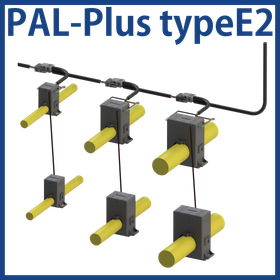
Visualize the power of the equipment and detect anomalies. Easily implementable in existing equipment with Modbus compatibility.
In factory equipment management, early detection of equipment anomalies is essential for maintaining productivity and ensuring safety. Equipment failures can lead to production line stoppages and unexpected cost increases. Our AC current sensors continuously monitor the current values of equipment and detect abnormal power consumption, helping to identify equipment anomalies early and minimize downtime. 【Usage Scenarios】 * Monitoring the current of equipment such as motors and pumps * Understanding the overall power usage of the production line * Reducing maintenance costs through anomaly detection 【Benefits of Implementation】 * Reducing the risk of equipment failure * Preventing losses due to unexpected production stoppages * Optimizing energy consumption
